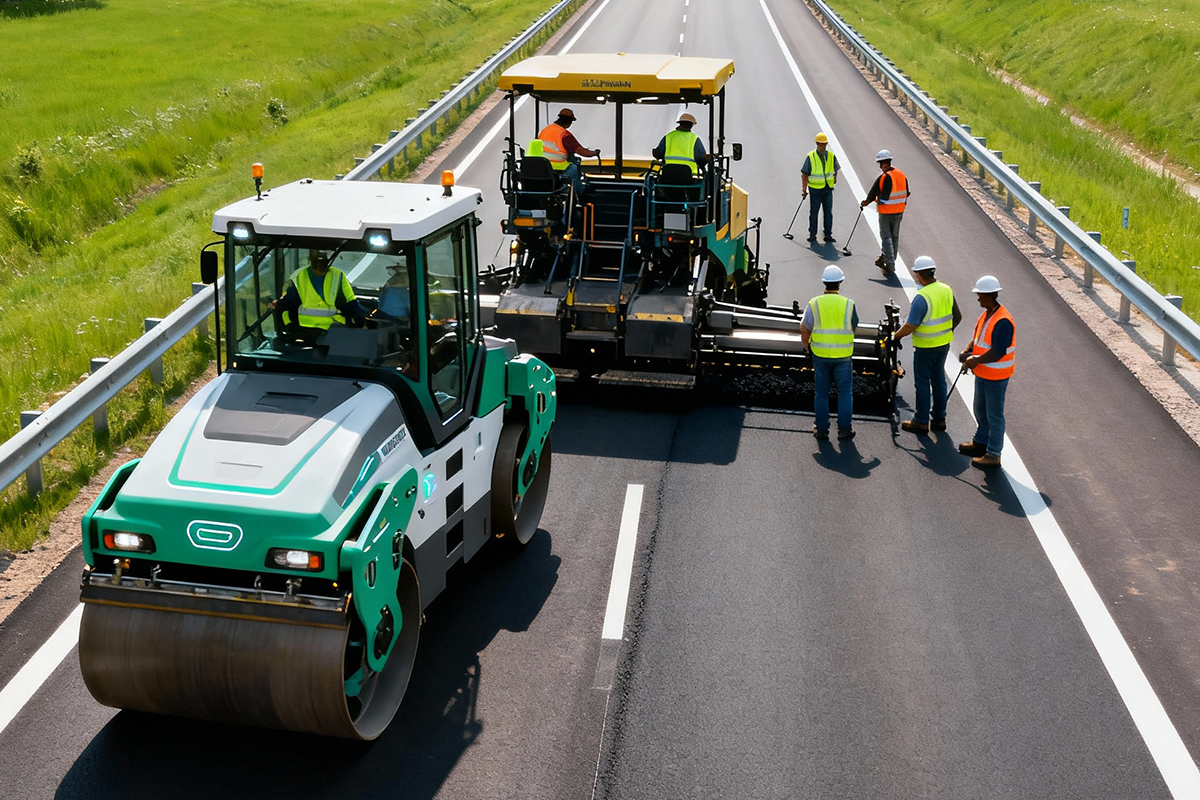
The National Highways Authority of India (NHAI), the country’s leading road development agency, sought an innovative pavement solution for a 120-kilometer stretch of highway in a high-temperature region.
The existing pavement was deteriorating rapidly, with issues like oxidation, cracking, and surface roughness affecting both safety and comfort. The goal was to construct a sustainable, cost-effective, and long-lasting pavement system that could withstand India’s harsh climatic and traffic conditions.
Ooms Avenhorn Holding India Pvt. Ltd. was selected for its proven expertise in delivering European-standard road technologies customized for Indian terrains.
The key challenges included:
Intense temperature fluctuations, leading to accelerated bitumen aging.
Heavy traffic loads from commercial and freight vehicles.
High maintenance costs due to frequent patchwork repairs.
Environmental concerns, as traditional hot-mix asphalt production emits high levels of CO₂ and consumes excessive energy.
The NHAI needed a solution that would balance performance, sustainability, and cost efficiency.
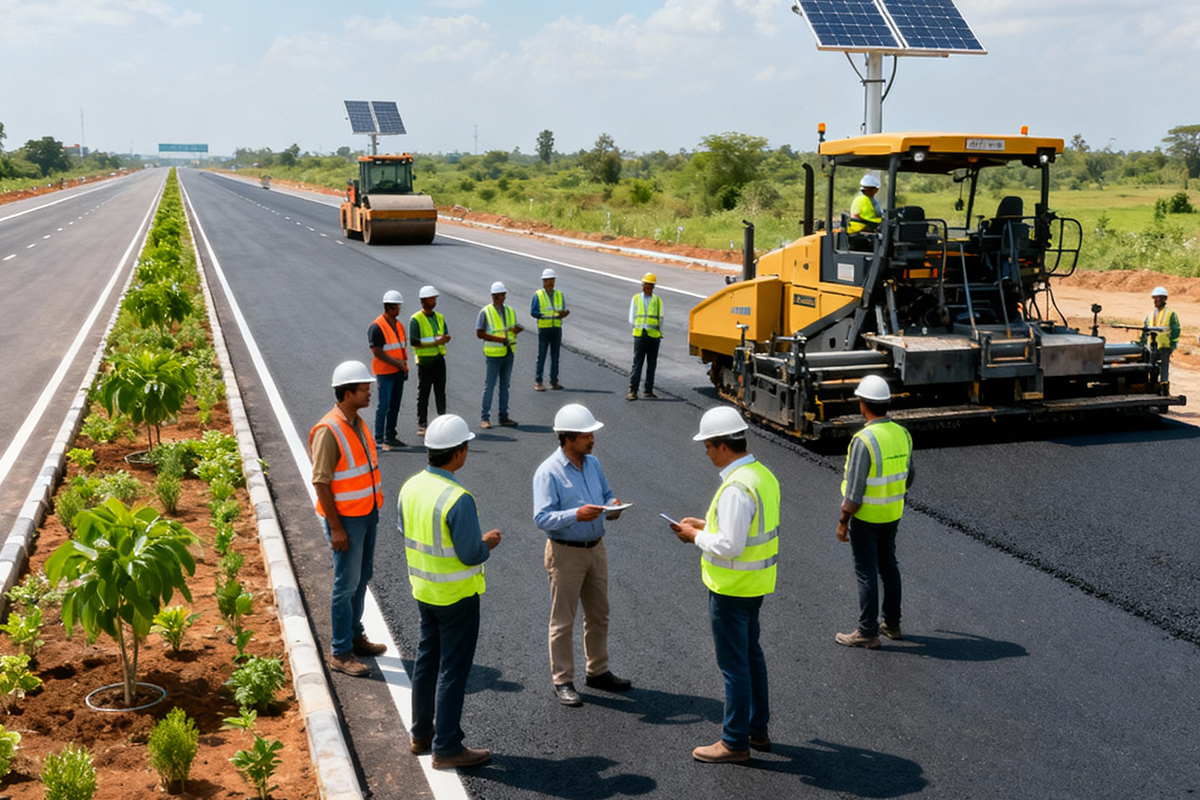
Ooms India introduced a groundbreaking approach using Foamed Bitumen Technology combined with Reclaimed Asphalt Pavement (RAP) materials.
This sustainable technique allowed the reuse of milled pavement materials, reducing the need for new aggregates and minimizing waste. The foamed bitumen provided excellent coating of aggregates, improved mix workability, and delivered superior flexibility — ensuring better performance under dynamic loads.
Incorporating up to 40% RAP significantly reduced material costs and resource dependency while promoting circular construction principles.
Additionally, this method enabled lower temperature mixing, thereby reducing energy consumption and carbon emissions.
Ooms India’s on-site team meticulously planned and executed the project using:
State-of-the-art mobile foaming plants
Automated temperature and moisture control systems
Continuous compaction monitoring for uniform density
Our engineers conducted field trials and laboratory performance tests at every stage to validate parameters such as stability, air voids, moisture susceptibility, and fatigue resistance.
To ensure sustainability, the project also incorporated eco-friendly additives and stabilizers that further extended pavement life without compromising strength.
25% reduction in total material costs through RAP reuse
40% reduction in CO₂ emissions during production and laying
Extended pavement service life from 5 to 8 years before major maintenance
Improved ride quality index, leading to enhanced driver comfort and safety
Reduced fuel consumption due to smoother surfaces
This project demonstrated the tangible benefits of sustainable road engineering, proving that green construction can deliver both environmental and economic value.
The project was later recognized by regional authorities and industry associations for its contribution to environmentally responsible infrastructure development. It served as a model for other NHAI projects aiming to reduce carbon footprints and adopt circular economy principles in road construction.
By integrating Dutch engineering expertise with Indian innovation, Ooms Avenhorn Holding India Pvt. Ltd. redefined what is possible in sustainable road development.
This highway project stands as a powerful example of how advanced materials, modern technology, and responsible construction practices can coexist — delivering long-lasting, high-performance, and eco-efficient roads that support India’s vision for resilient national infrastructure.
Both case studies reflect the core philosophy of Ooms Avenhorn Holding India Pvt. Ltd. — to deliver European-grade technology adapted for Indian conditions while maintaining a strong commitment to quality, innovation, and sustainability.
From airports to highways, every project is a step forward in redefining how India builds and maintains its infrastructure. By combining global research, local expertise, and cutting-edge materials science, Ooms India continues to pave the way for a smarter, safer, and more sustainable future for transportation networks across the nation.